“Anxiety is love’s greatest killer. It makes others feel as you might when a drowning man holds on to you. You want to save him, but you know he will strangle you with his panic.” ~Anais Nin
When a relationship causes anxiety, we are groomed to believe our relationship anxiety is the problem. After all, anxiety can strangle love, suffocate it, tear it apart, leaving most of us to believe that relationships and anxiety simply don’t mix.
If we feel anxious, most of us believe we need to get ourselves under control lest we ruin our relationship. We don’t see anxiety as useful, we see it as a problem which adds pressure to the anxiety we are already feeling, and ultimately escalates it.
But what if anxiety wasn’t the problem at all, but was instead trying to tell us something? Something important that we needed to hear?
The most important thing to know about anxiety is that it isn’t dangerous, and nothing is wrong with you if you feel it. Anxiety can actually be a powerful help to you, a sensitive tool we can use to pick up on potential threats to the things we care about most. What we do with anxiety can make the difference between it being helpful, or harmful. Anxiety wants to be recognized, and understood.
If your relationship is causing you anxiety, here are a few things to consider.
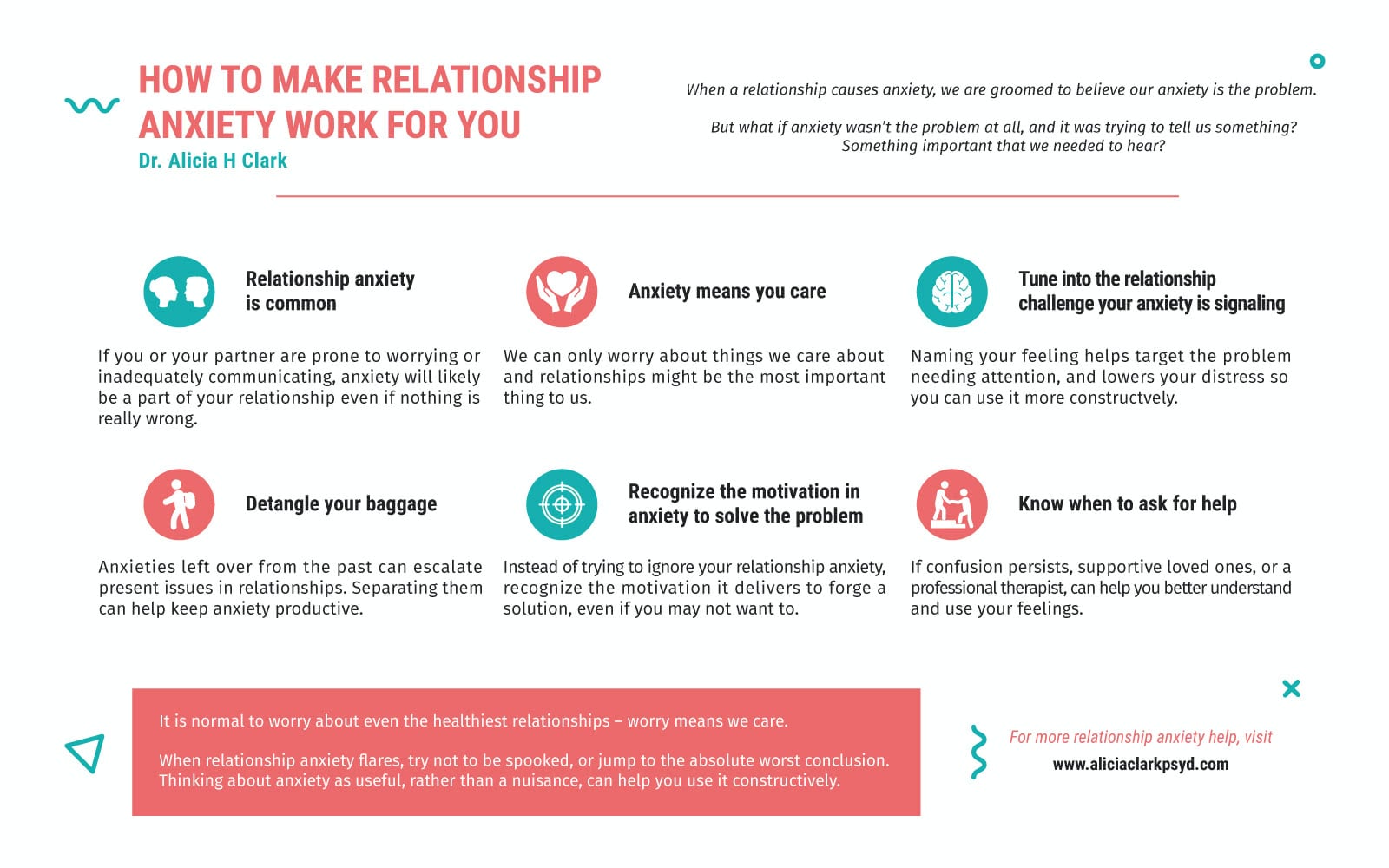
1. Anxiety in relationships is common.
Especially if you or your partner are prone to worrying or inadequately communicating, anxiety will be a part of your relationship, and that doesn’t necessarily make it a bad thing. Social by nature, we are pulled powerfully to love, long to feel connected, and want to protect our connections when we secure them. It isn’t hard to feel anxious when we don’t feel connected, and also anxious when we do feel connected, anticipating a time when we may not be. Anxiety and relationships go hand in hand.
2. Anxiety means you care.
Fundamentally, anxiety means you care – we can only worry about things we care about – and relationships might be the most important thing to us. We care deeply about securing love, and keeping it safe. And we feel anxiety when love might be at risk. We want our relationships to work, and we also worry about not having them. It’s hard to imagine not feeling anxious from time to time when it comes to love. What isn’t helpful is worrying about your anxiety. When we worry about your anxious feelings it escalates anxiety, confuses us, and blurs the message we need to hear.
3. Tune into what relationship challenge your anxiety is signaling.
Take a moment to acknowledge and name how you’re feeling (this actually lowers your distress according to research) Are you feeling a normal amount of protective anxiety, or is there something more significant worrying you?
4. Separate personal worries from relationship worry.
Anxiety can be just about you, and insecurities you bring to every relationship, or anxiety can reflect stresses in the relationship. Determining reasonable relationship anxiety from your own insecurity is important, and not always as simple as it sounds.
5. Detangle your baggage.
We all bring our previous experiences, or “baggage,” into relationships – we can’t help but do this. But fears and anxieties left over from our childhood or previous relationships can flare up in current relationships. Unrecognized baggage can confuse anxiety’s signal, and add to what might otherwise be a manageable anxiety load. This can make us more irritable, less patient, and quicker to react.
Recognizing your buttons are getting pushed, and that the situation is similar but not the same, can help lower your anxiety again, and direct your focus to the actual problems at hand – your communication, the time you’re spending together, how you are feeling. These are the stressors that deserve your attention, and your collective solutions.
6. Beware of anxiety from other areas of life bleeding into your relationship.
Anxiety is a squirly emotion that doesn’t always “respect boundaries” when it comes to areas of our life. If you are anxious in one area of your life, it isn’t hard to feel anxiety in other areas too. This is called overgeneralization, and it is a common symptom of elevated anxiety. If you are feeling stress in your life – even good stress like when you are striving for more – your relationship could be bearing the brunt of your increased distress about other things.
7. Carefully sort your concerns from those of others.
Beware of external pressures that can cause relationship anxiety. Family, friends, religious, and societal pressure can be real, and can lead to relationship anxiety. Expectations we take in from others can be insidious and often tough to differentiate from our own values. Pressure absorbed from others can create anxiety about needing to simply be in a relationship, often obscuring your focus on deciding whether this is the right relationship.
8. Know when anxiety is causing its own set of relationship problems.
If you are fighting more, communicating less, or starting to feel strained by anxiety in your relationship, this is a good sign that anxiety’s energy isn’t being put to its best use. Sometimes it’s hard to know what to do when a relationship causes anxiety, even as anxiety is always trying to signal something important that deserves our attention. When anxiety’s energy isn’t channeled into problem-solving solutions, it will fester and eat away at a situation until it is addressed. Anxiety will continue to escalate until we address it.
9. Recognize the motivation in anxiety to solve the problem.
Instead of trying to ignore when your relationship causes anxiety, recognize the motivation it delivers to do something aboutthe problem. Are you worried about communication, constant unresolved fighting, betrayals of trust, or a lack of safety? Tuning into your rational concerns can deliver the information and energy you need to take constructive action.
10. Remember moderate anxiety can help you function at your best.
Contrary to popular belief, moderate anxiety can create the sweet spot of performance that allows us to strive for our best selves, and relationships. Not too little, and not too much, moderate anxiety can be a trusted partner in helping us strive to be our best. Anxiety keeps us focused on the things that matter most. Not just in our personal lives, anxiety can be a trusted partner in our relationships as well.
11. Prioritize self-care and wellness when relationship anxiety lingers.
When you are stressed, and your defenses are worn down, you can be more vulnerable to the negative symptoms of anxiety. Even if it’s not what you feel like doing, this is the time to limit alcohol, sleep more, heavy up self care. Proper sleep, wholesome nutrition, and physical activity will help keep your body and mind healthy, so you can harness your relationship anxiety most effectively.
12. Mind your attitude.
No one has ever claimed anxiety is a picnic, and feeling scared and confused can be deeply unsettling. But just because anxiety is uncomfortable doesn’t mean it’s a bad thing. How you think about stress and anxiety determines how it will affect you according to science. Anxiety plays dirty when it comes to grabbling our attention and motivating change. Keeping a positive attitude can help you keep anxiety productive, rather than letting it devolve into something that isn’t.
13. Know when to ask for help.
If detangling your anxiety or communicating effectively proves to be a roadblock, it’s time for help. Friends and loved ones can be a great support, but sometimes their guidance doesn’t always feel helpful. A professional therapist can help you detangle your feelings and work through the roadblocks that are holding you and your relationship back. Ultimately the goal of therapy is to help you understand yourself, and your relationships better, so that you can more clearly see and implement solutions that are needed.
If anxiety has become overwhelming, or you are struggling with feelings of hopelessness, here is where you can access immediate help now.
It is normal to worry about even the healthiest relationships, especially if worry comes naturally or if we have had reason to worry in the past.
When a relationship causes anxiety, try not to be spooked, or jump to the absolute worst conclusion. Thinking about anxiety as useful, rather than a nuisance, can help you use it constructively.
Don’t be afraid to name that you care about your partner and your relationship; this sometimes can be anxiety’s most effective use, fueling communication and intimacy that ultimately protects your bond.
Looking for more help managing relationship anxiety? Get my 9 Relationship Anxiety Hacks here, based on my bestselling book, Hack Your Anxiety. Using exercises and simple explanations, these 9 strategies expand the points of this article offering tools to better understand and harness your relationship anxiety for good.
Photo by Maddi Bazzocco on Unsplash